Documentaries
MNEMOSYNE
A documentary exploring the latest research in the neuroscience of spatial memory, examining how we navigate, remember, and reconstruct space through the brain.
The mysteries of human memory have long fascinated scientists and artists alike. This documentary explores how memory is formed, recalled, and actively shapes our experience of the world—extending far beyond recollection into processes such as storytelling, navigation, imagination, and decision-making. Blending cognitive neuroscience with intimate, visually driven storytelling, this documentary reveals memory as a dynamic force at the core of human identity, bridging the gap between scientific insight and lived experience.
The documentary features exclusive interviews with leading researchers in cognitive neuroscience:
Dr Timothy Behrens (UCL / University of Oxford) examines how the hippocampus constructs cognitive maps not only for physical navigation but also for abstract spaces such as social networks and decision-making.
Dr Avital Hahamy (UCL) explores how the brain reactivates relevant memories during storytelling, allowing us to interpret both narratives and real-life experiences through contextual recall.
Professor Neil Burgess (UCL) investigates how the hippocampus generates and uses cognitive maps for spatial navigation, demonstrating how we remember locations and orient ourselves within the world.
Filmed at the Sainsbury Wellcome Centre and the Wellcome Centre for Human Neuroimaging at UCL, the documentary situates cutting-edge research within a human framework, revealing memory as an essential system through which we understand, navigate, and imagine our lives.
MSc Social and Cultural Anthropology - Final Project
An Interview With A Stranger
Humera Khan
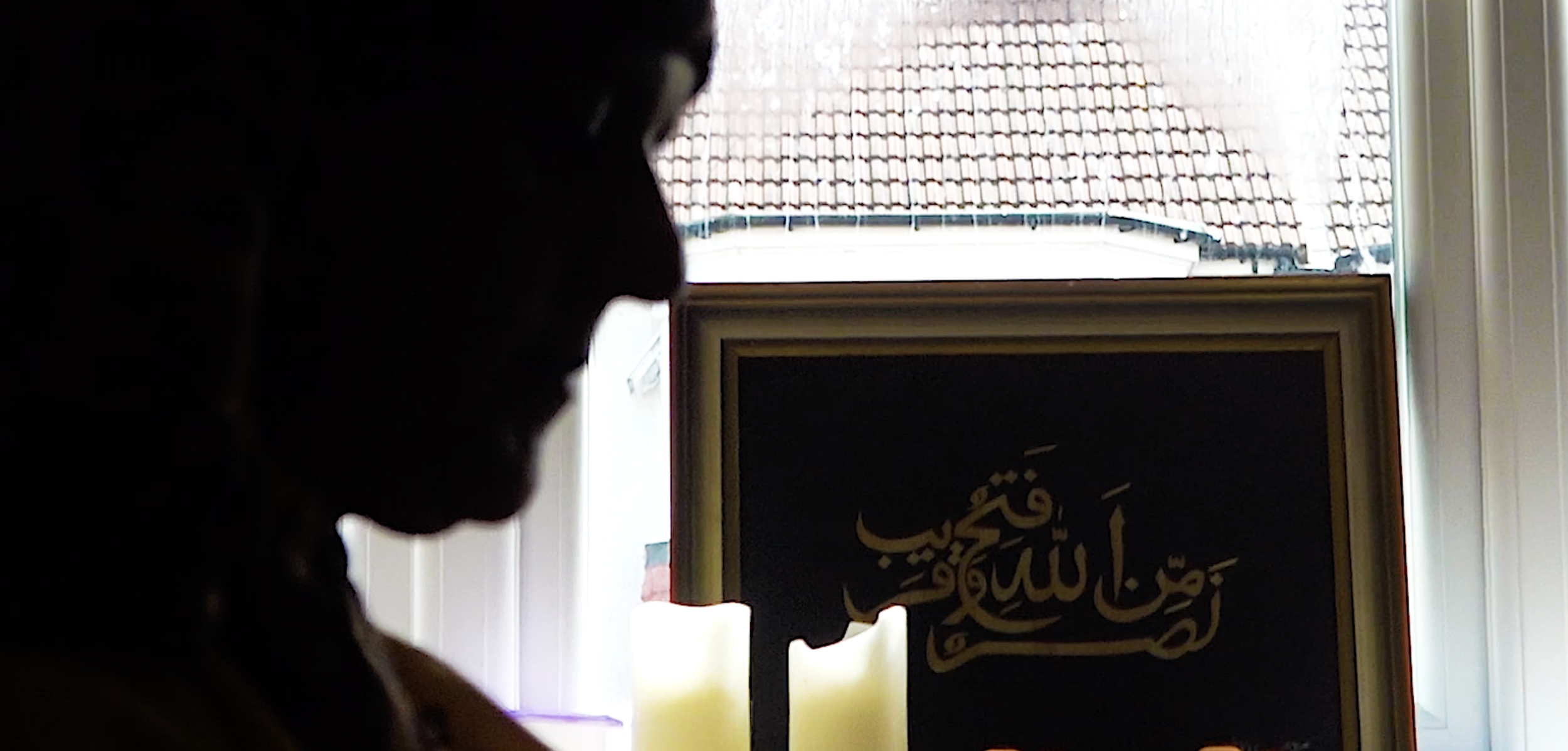
Portrait of a Stranger: Humera Khan (2026)
As part of my documentary module, I was tasked with conducting and presenting an interview with a stranger—using visual and creative methods to reveal their story. I met Humera Khan while filming a workshop on business skills at University of Westminster, where she was working with students. After our initial meeting, I asked if she would be open to sharing more about her life and experiences.
Humera generously welcomed me into her home, offering a deeply personal insight into her journey. Through documents, photographs, and conversation, she traced her experience as an immigrant—moving to London with her parents and growing up across different communities. The film became an exploration not only of memory and identity, but of how personal histories are preserved, revisited, and reinterpreted through both narrative and image.
Humera Khan is a trustee and co-founder of An-Nisa Society, with a longstanding background in local government, equal opportunities, race relations, and gender advocacy. She is widely recognised as an activist, adviser, trainer, and educator on issues affecting Muslim communities, working closely with families to provide support and counselling across a wide range of social concerns.
I was awarded the highest mark in my class 2026, and hope to use the skills I have learnt to develop my future projects.
You may request to view this piece as it is not a part of the public domain.
Cocoa Media TV Project (2026)
Recently, I took part in a project with Cocoa Media TV, working with students aged 7–13 to introduce them to filmmaking through a hands-on, practical approach. The project focused on teaching the fundamentals of working on a film set, including how to set up cameras, lighting, and sound equipment, as well as understanding the different roles and collaborative processes involved in production.
As part of this experience, we travelled to University of Cambridge, where the students had the opportunity to conduct an exclusive interview with Osarenkhoe Ogbeide during our visit to the Ray Dolby Centre (Department of Physics). This brought together education, filmmaking, and academic research in a unique and engaging environment.
The project reflects my ongoing interest in education, accessibility, and creating opportunities for young people to engage with film in meaningful and empowering ways.
I also have many other plans for future documentary projects, so make sure to keep an eye on this space!